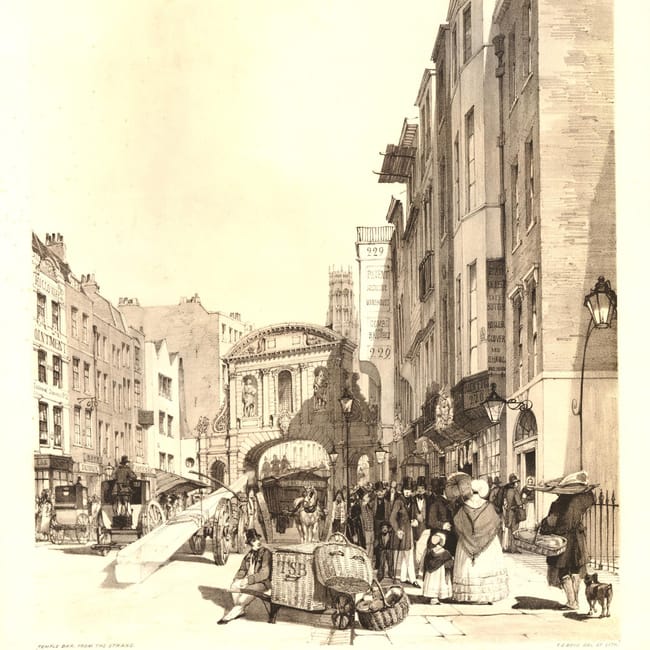
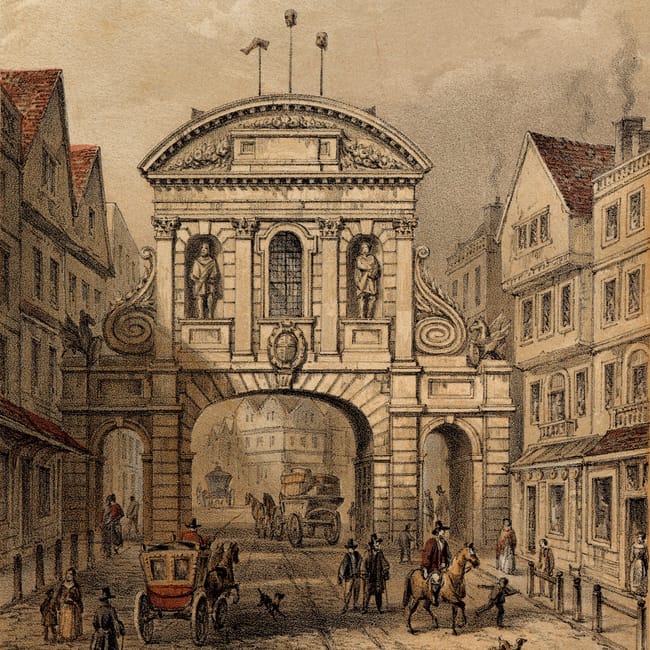
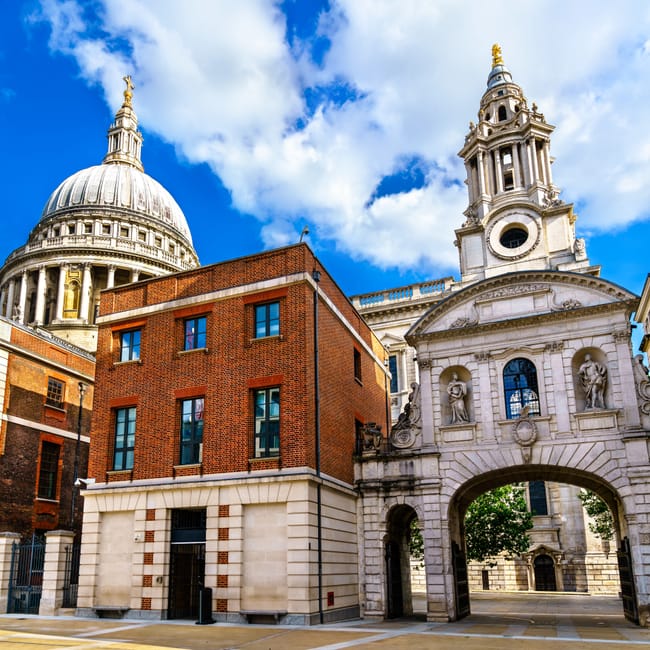
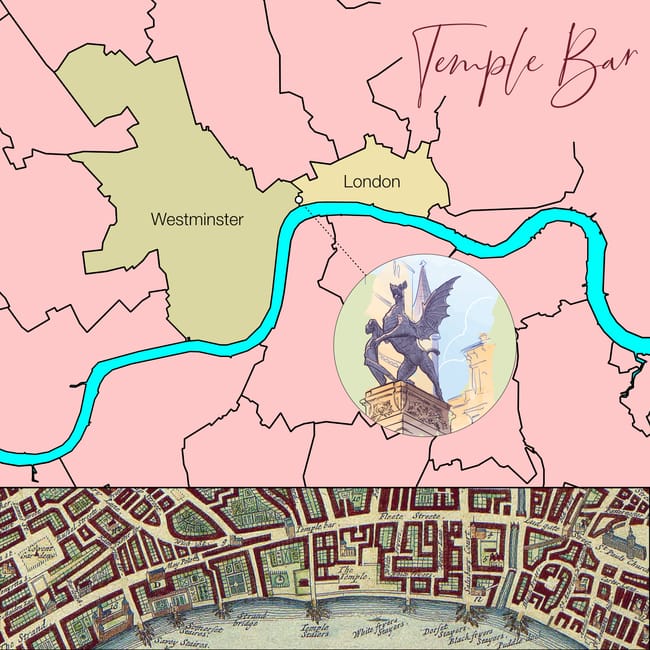
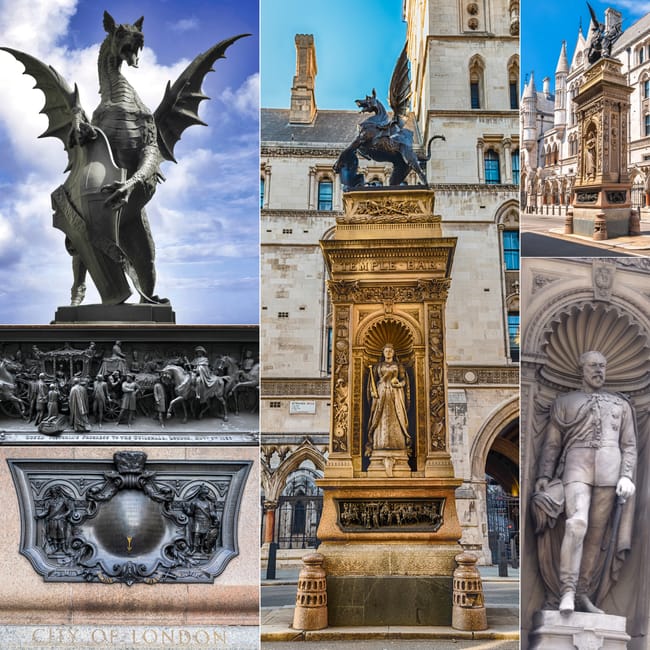
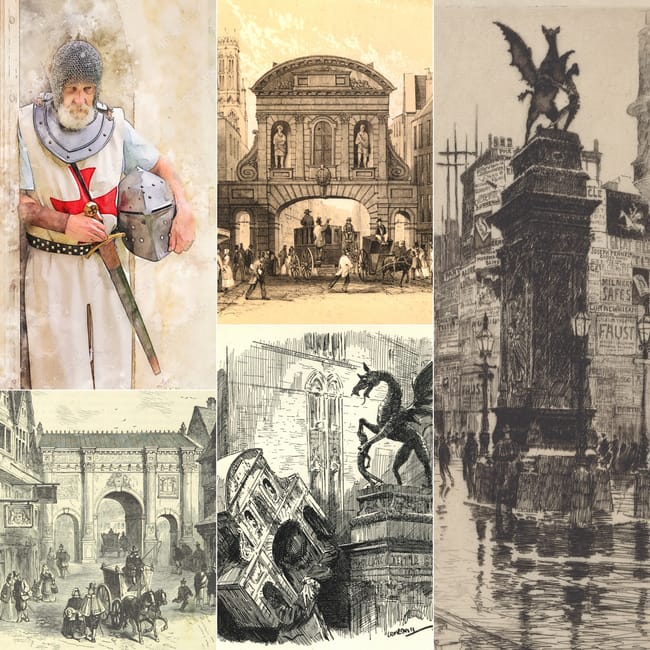
#TempleBar was designed & built in 1671 by Sir #ChristopherWren to replace the dilapidated 14th-century gate that marked the western limits of the City of London where #FleetStreet & #Strand meet. Above the arch, facing the City, were statues of #JamesI & #AnneOfDenmark, while on the west side, facing Westminster, were statues of #CharlesI & #CharlesII.
Heads of traitors mounted on spikes were exhibited on top of #TempleBar & could be examined by telescope, for a halfpenny a go. Jacobites #FrancisTowneley & #GeorgeFletcher were the last. Put up in 1746 their heads remained for +25yrs until a storm blew them down. Stocks were also set up by the gate & were occupied by, amongst others, #TitusOates in 1685 & #DanielDefoe in 1703.
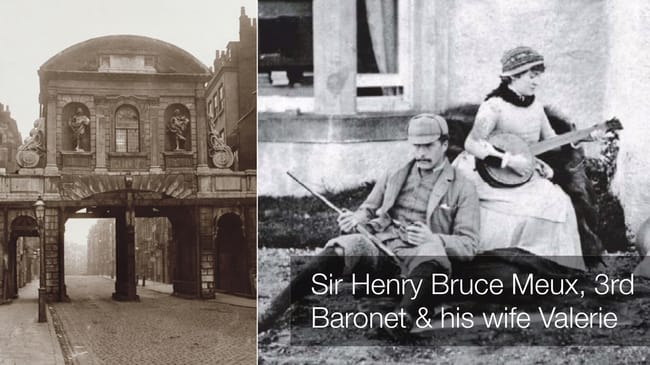
In 1878 #TempleBar was removed from its #FleetStreet location as the narrow central arch restricted traffic flow. After lying in bits in a scrap yard in Farringdon for 10 years, the gate was rescued by wealthy London brewer & politician Sir #HenryBruceMeux who purchased the dismantled stone and re-erected the gate at his mansion house #TheobaldsPark in Hertfordshire.
The western limits of #CityOfLondon were marked with a gate or ‘bar’ close to #TempleChurch of #KnightsTemplar, hence #TempleBar, since 1293 when the boundary was drawn by a chain between two wooden posts. In 1351 a stone gate was erected & refurbished over the years, surviving the 1666 #GreatFireOfLondon before it was demolished & replaced by #ChristopherWren’s Arch in 1672.
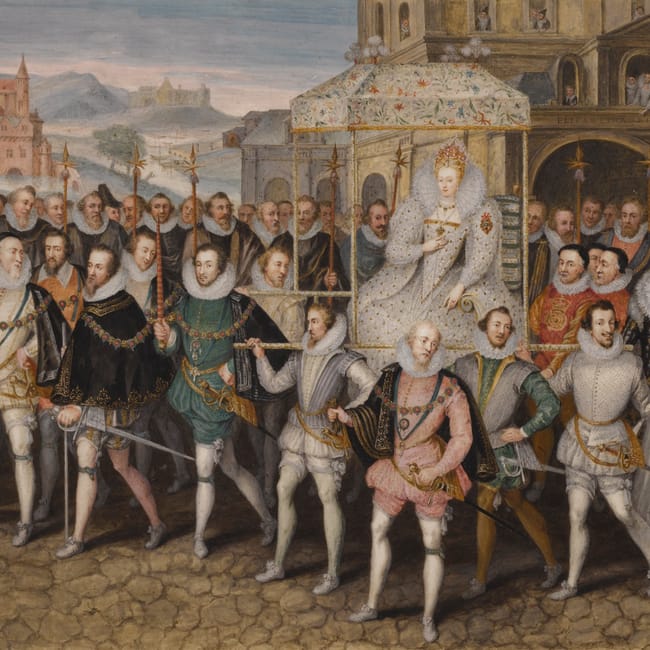
When #QueenElizabethI went to #StPaulsCathedral to give thanks for defeating the #SpanishArmada in 1588 she waited at #TempleBar for the #LordMayorOfLondon to welcome her into the City. He offered her his #SwordOfState as a sign of fealty, the sword was carried at the head of the procession to show that the Monarch was under his protection; a tradition maintained ever since.