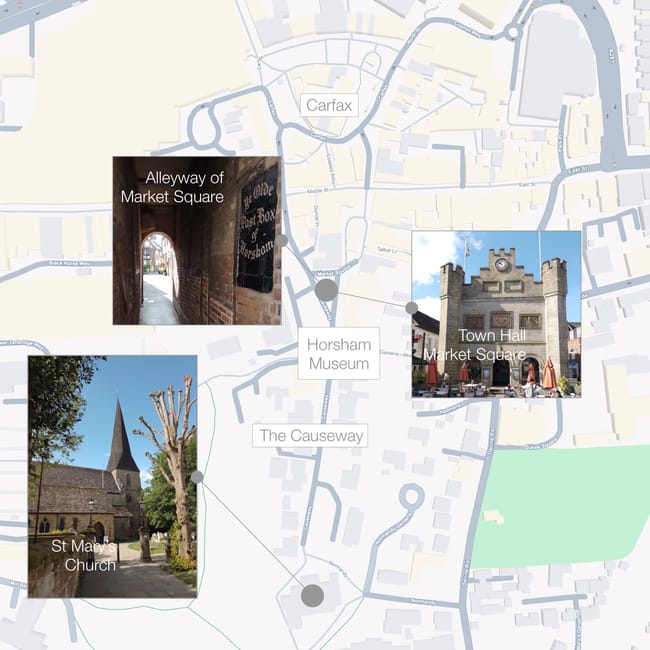
Historic #Horsham is set about the #Carfax, meaning ‘four ways’ or ‘crossroads’. It includes the #TownHall in #MarketSquare, originally a 17th CE market hall, rebuilt in 1812 by the #DukeofNorfolk and again in 1888, & #TheCauseway, one of the finest streets in #Sussex, lined with lime trees and 17th, 18th and 19th century Wealden houses that lead down to the church.
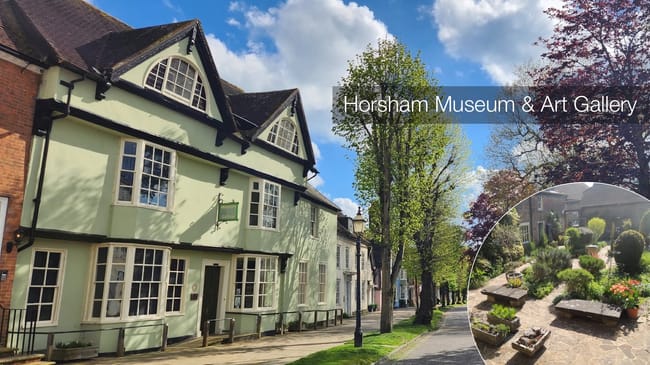
#HorshamMuseumSociety was founded in 1893 & in 1941 moved into #CausewayHouse, one of the oldest houses on #TheCauseway, dating from 1450. On display are objects relating to the #Horsham area, a gallery of local artists & a room dedicated to the poet #PercyByssheShelley. The walled #MuseumGarden was laid out in 1981 with plants evolved from medieval herbs, roses & shrubs.
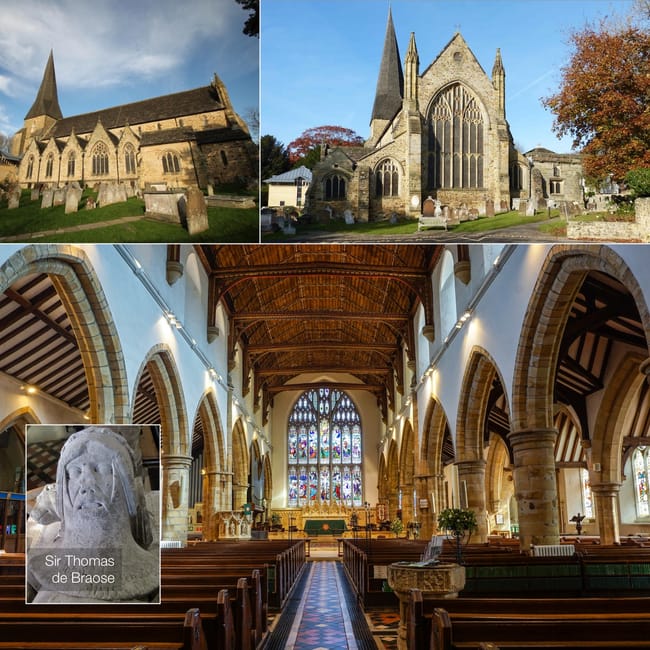
The parish church of #StMary is the oldest building in #Horsham, 12th & 13th CE, mainly #EarlyEnglish. The huge buttressed tower is crowned with a tall 15th CE warped shingled spire. North of the altar is the canopied tomb of #ThomasHoo (d1486) an ancestor of #AnneBoleyn, & to the south the tomb of local landowner #SirThomasdeBraose (d1395). Unusually there is no chancel arch.
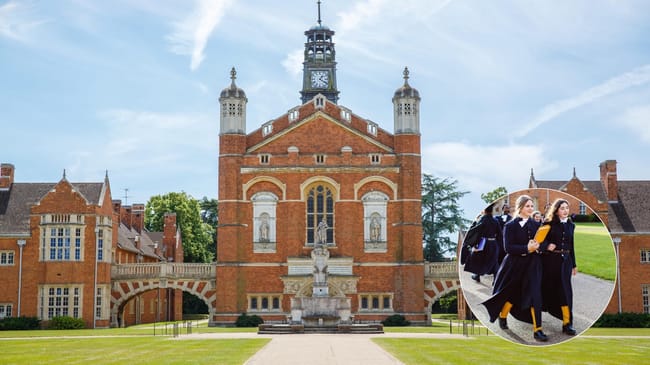
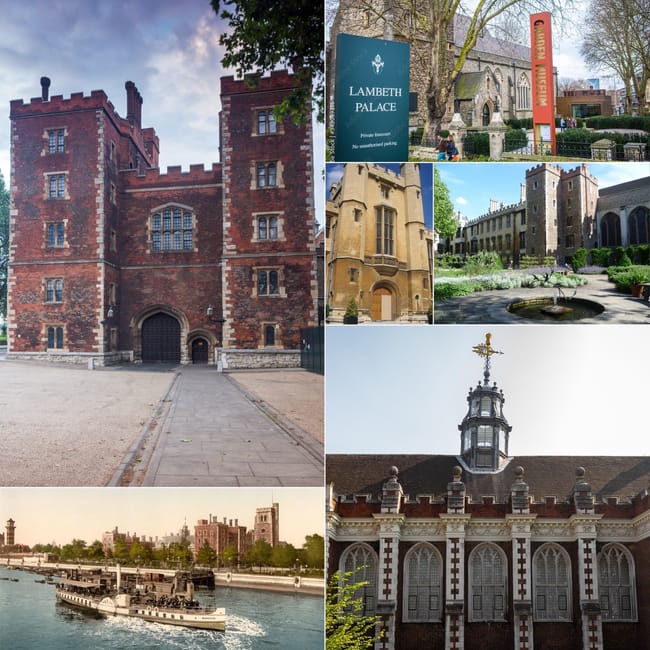
#ChristsHospitalSchool, founded in 1552 by #EdwardVI, moved to #Horsham from London in 1902. Set around a vast quadrangle the complex of red brick buildings was designed by #AstonWebb & incorporates a gateway from the original school designed by #ChristopherWren. Known as the #BluecoatSchool, after the distinctive original Tudor uniform of a long blue coat & yellow socks.
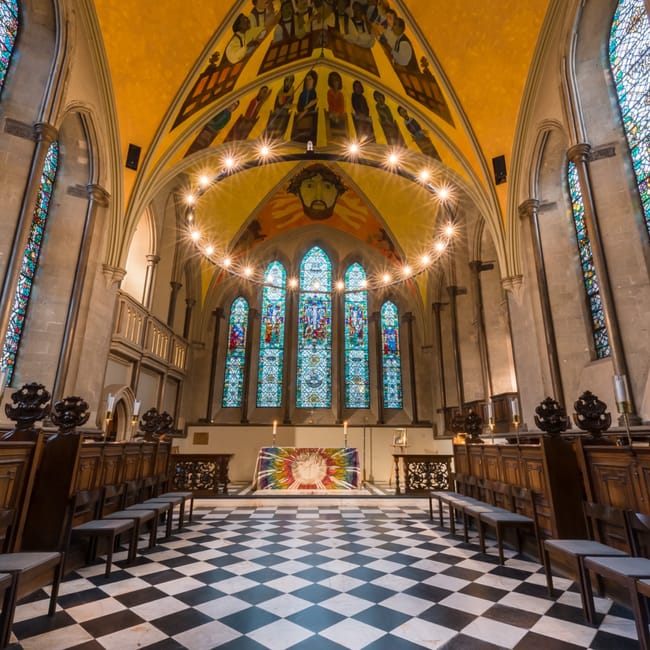
#LambethPalaceChapel was built c1225, and although rebuilt after being bombed in #WW2, is a fine example of 13th-century #EarlyEnglishGothicArchitecture with a vaulted ceiling and high lancet windows of stained glass. The original 13th-century west doorway survives as does a 17th-century carved wooden screen made for #Archbishop#WilliamLaud.
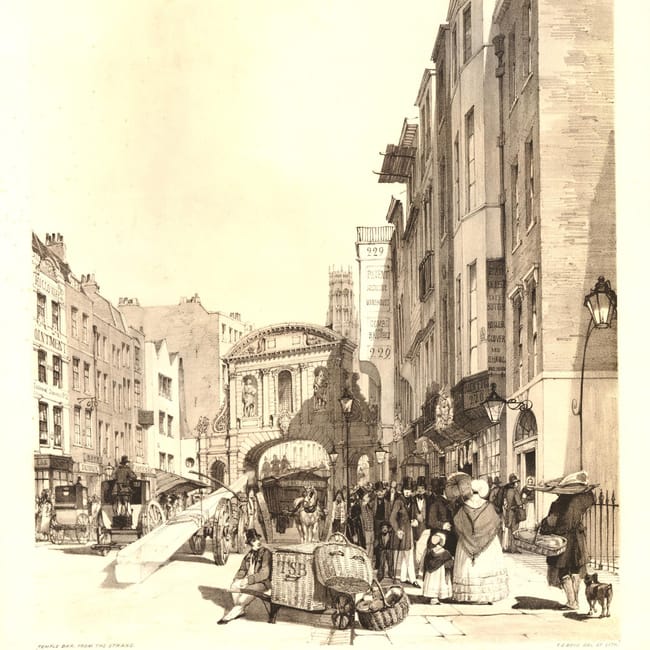
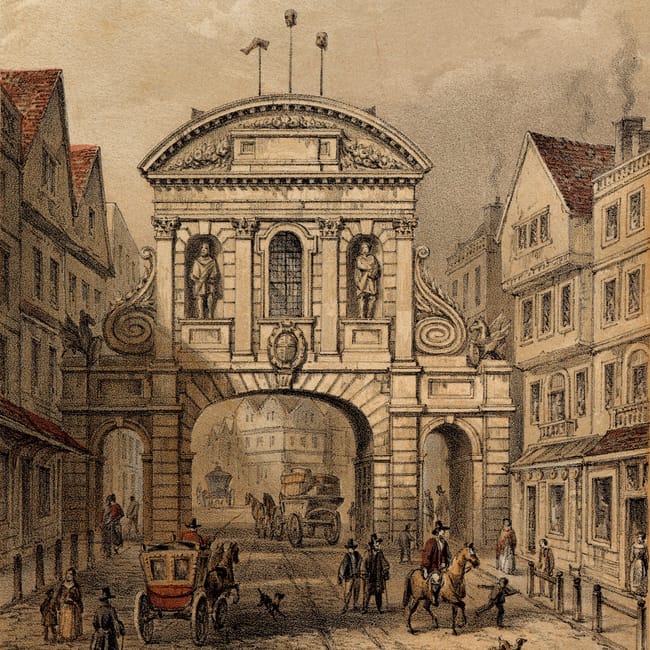
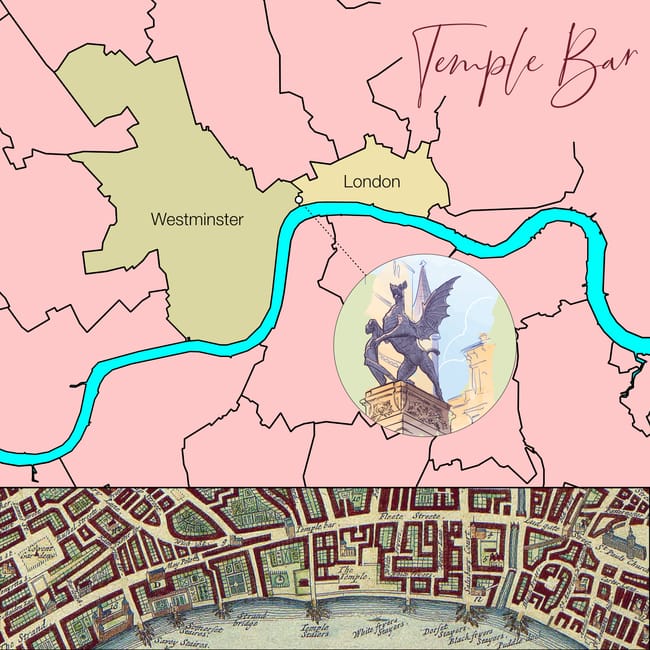
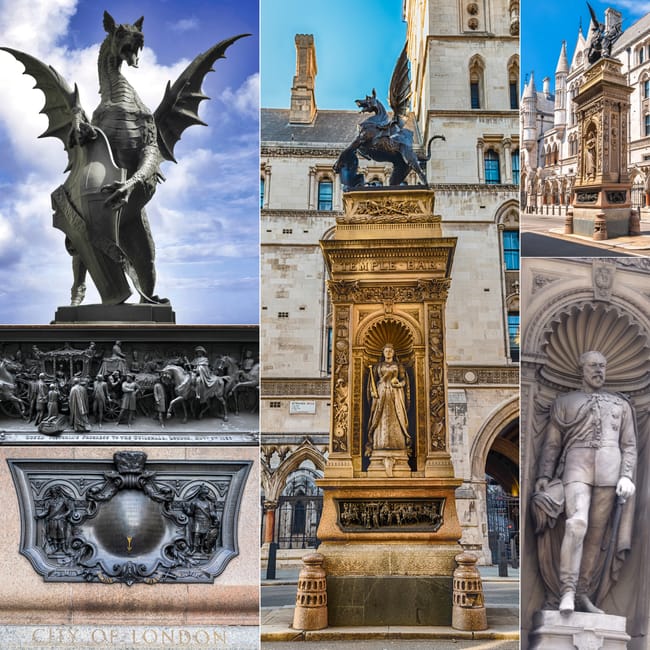
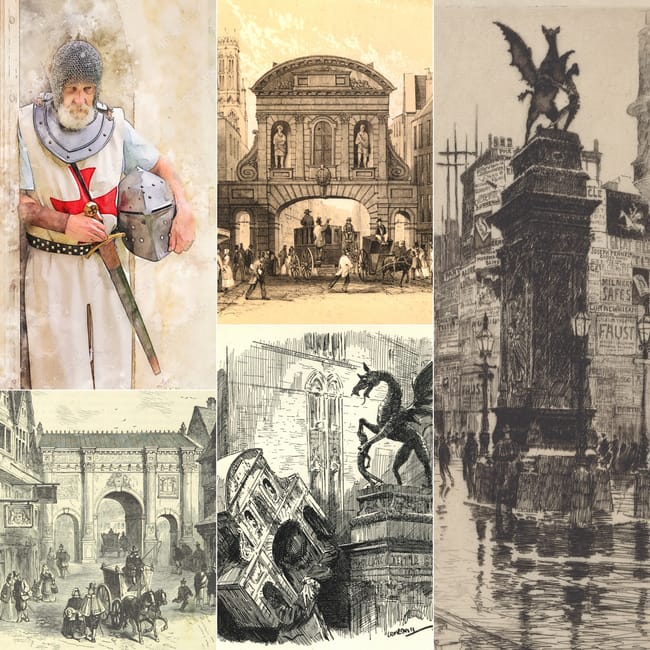
#TempleBar was designed & built in 1671 by Sir #ChristopherWren to replace the dilapidated 14th-century gate that marked the western limits of the City of London where #FleetStreet & #Strand meet. Above the arch, facing the City, were statues of #JamesI & #AnneOfDenmark, while on the west side, facing Westminster, were statues of #CharlesI & #CharlesII.
Heads of traitors mounted on spikes were exhibited on top of #TempleBar & could be examined by telescope, for a halfpenny a go. Jacobites #FrancisTowneley & #GeorgeFletcher were the last. Put up in 1746 their heads remained for +25yrs until a storm blew them down. Stocks were also set up by the gate & were occupied by, amongst others, #TitusOates in 1685 & #DanielDefoe in 1703.
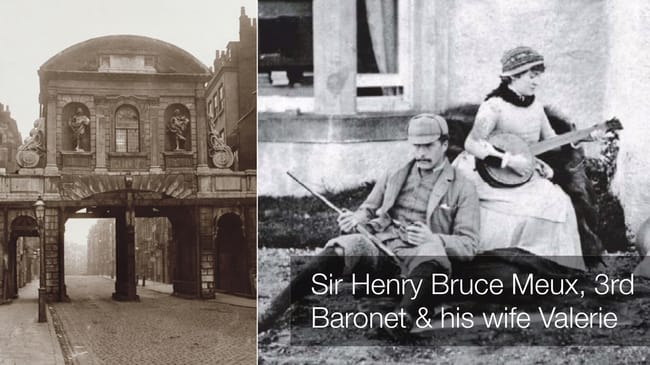
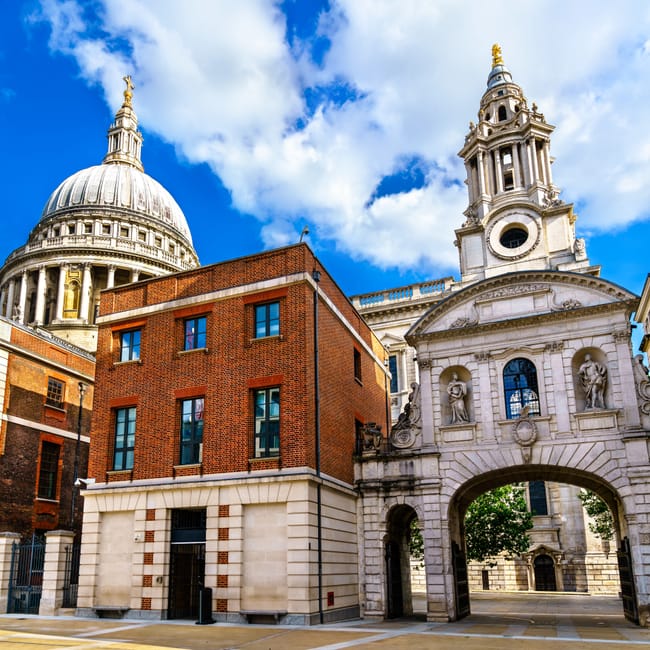
In 1878 #TempleBar was removed from its #FleetStreet location as the narrow central arch restricted traffic flow. After lying in bits in a scrap yard in Farringdon for 10 years, the gate was rescued by wealthy London brewer & politician Sir #HenryBruceMeux who purchased the dismantled stone and re-erected the gate at his mansion house #TheobaldsPark in Hertfordshire.
The western limits of #CityOfLondon were marked with a gate or ‘bar’ close to #TempleChurch of #KnightsTemplar, hence #TempleBar, since 1293 when the boundary was drawn by a chain between two wooden posts. In 1351 a stone gate was erected & refurbished over the years, surviving the 1666 #GreatFireOfLondon before it was demolished & replaced by #ChristopherWren’s Arch in 1672.
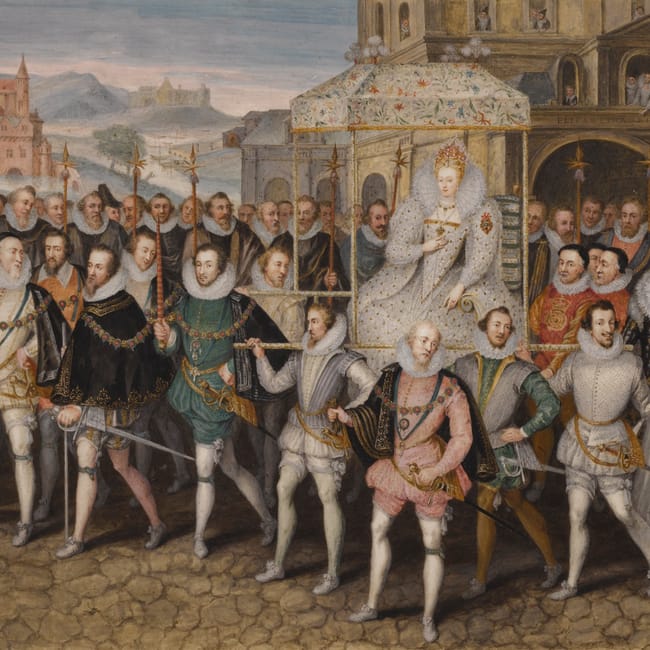
When #QueenElizabethI went to #StPaulsCathedral to give thanks for defeating the #SpanishArmada in 1588 she waited at #TempleBar for the #LordMayorOfLondon to welcome her into the City. He offered her his #SwordOfState as a sign of fealty, the sword was carried at the head of the procession to show that the Monarch was under his protection; a tradition maintained ever since.