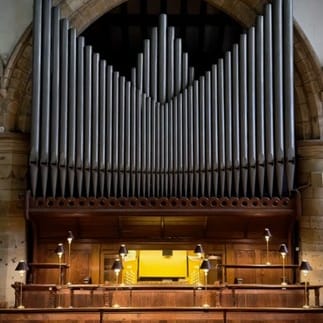
#ChristopherWren’s frustration at accommodating a pipe organ within his architectural plan for the new #StPaulsCathedral was evident in his description of it as ‘a confounded box of whistles’. #StMarysChurch in Horsham, accommodates a very special ‘box of whistles’ constructed by #HenryWillis, which incorporates his technical innovations shown at the #GreatExhibition of 1851.
The organ supporting the St Mary's choir in a time of joy - 'Hallelujah Chorus' at the end of the Easter Morning service 2025 https://shorturl.at/OuQG6
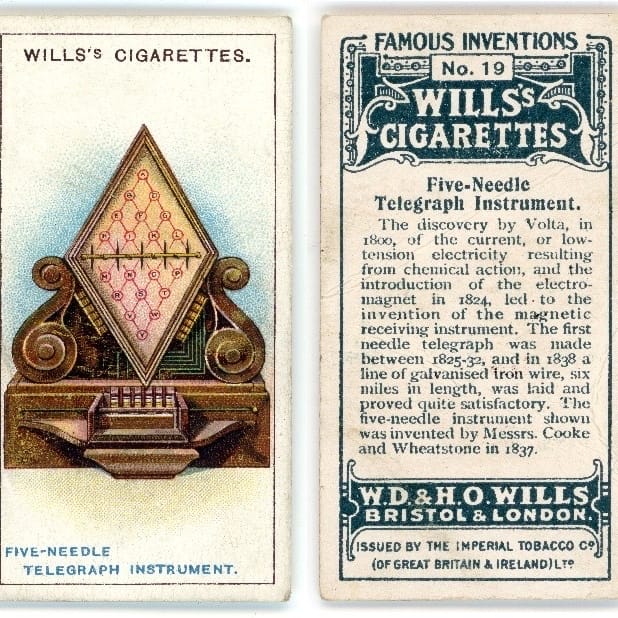
Pioneering work in telegraphy conducted by #SirCharlesWheatstone offered a simpler and more reliable method of relaying signals from the console to the pneumatic valves.
Hear St Mary's Organ supporting the Horsham community in a time of sorrow - 'Abide with me' from the Service commemorating the death of Queen Elizabeth II
https://shorturl.at/ikaHs
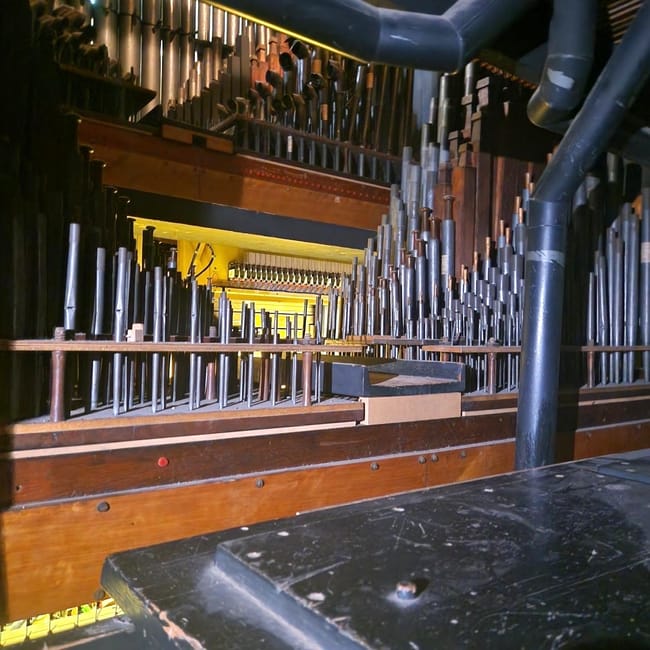
Over the years #StMarysChurch pipe organ has been maintained well, but the wind supply & especially its controls between stops, keys & pipes, have many moving parts & are worn. Some of the mechanical & pneumatic linkages date from 1909 & are increasingly subject to failure. The main wood & leather wind reservoir dates from 1865.
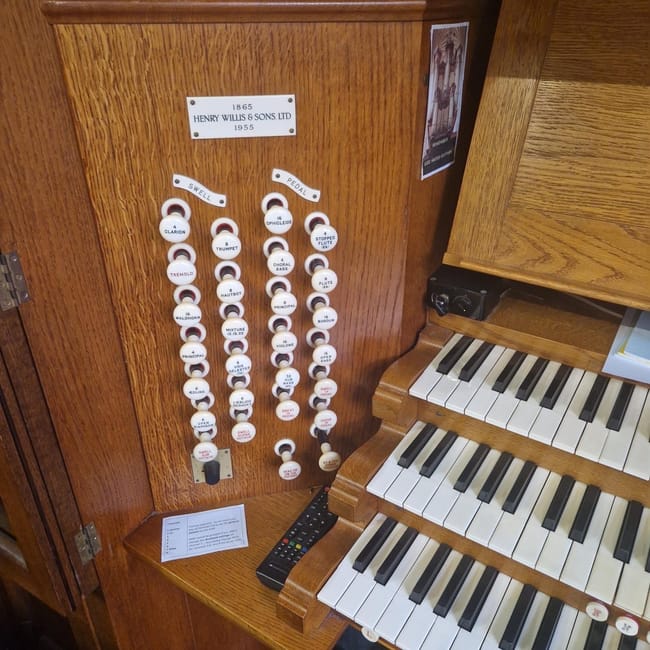
The pipe organ #HenryPadwick bought for #StMarysChurch in 1865 is the same exceptional instrument we hear today. Parishioners have always valued the instrument & the replacement parts grandson #HenryWillis III fitted in 1955, did not spoil its dramatic sound. Yet at present, our expert organists tiptoe around faulty keys so we enjoy the original sound #FatherWillis created.
The pipe organ was purchased as part of a much larger restoration project for #StMarysChurch which was in poor condition by 1863. During restoration an alarming 2ft lean on the church’s outer wall was corrected in just 3 hours using hydraulic jacks. The extension of rail services to #Horsham established it as an important travel hub, bringing greater prosperity & confidence.
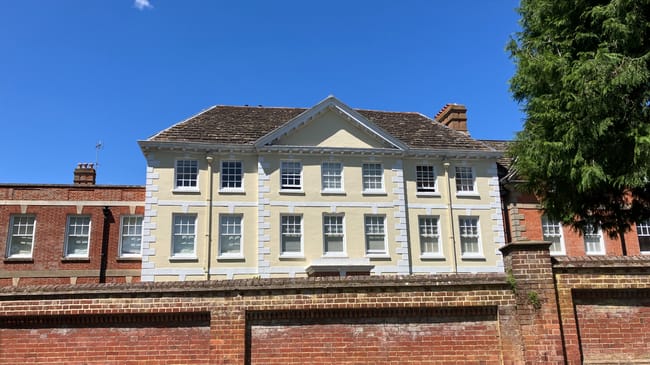
Church records suggest that much of the funding for the purchase of the pipe organ came from #HenryPadwick, a money lender, speculator & gambler who facilitated the wayward lifestyles of senior politicians & landed gentry. He owned a horse racing stable in Findon & one of his residences was the #CausewayManorHouse, which is now the #RSPCA headquarters.
The 1851 Willis organ could play multiple manuals simultaneously and incorporated ‘pistons’ that could activate preconfigured stop combinations from a single point. However, these features made the keyboard action excessively heavy.
#DrMatthewCamidge, a celebrated organist of the period, proclaimed that the force required press a key was ‘enough to paralyse’ most men.
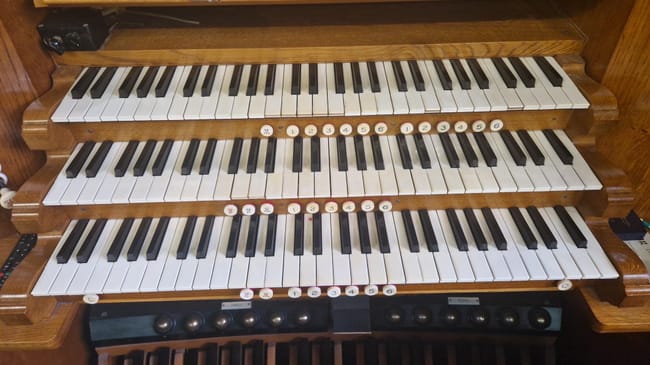
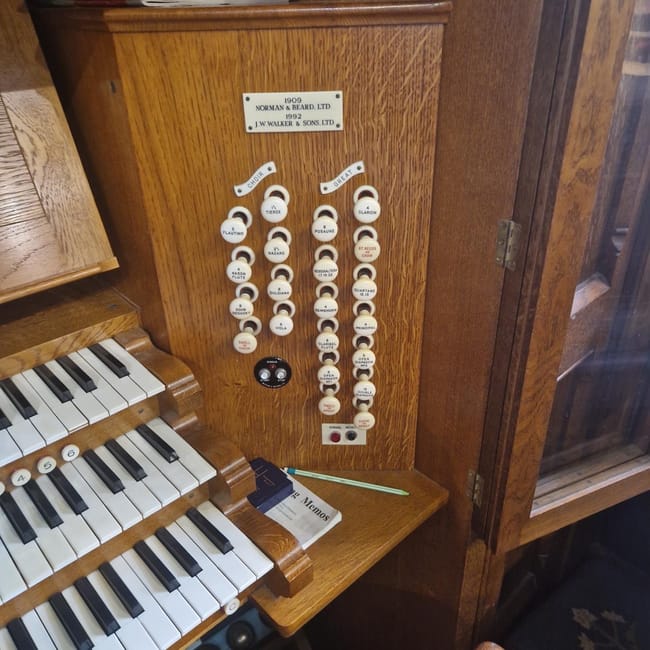
Each group of similarly voiced pipes are activated by one or more stops on the organ console. #StMarysChurch organ has 36 stops that connect almost 2000 pipes to three manuals and pedals.
More stops provide greater freedom for artistic interpretation of a musical composition. The increased complexity also required new methods for the organist to make best use of the instrument.
Pioneering work in telegraphy conducted by Sir #CharlesWheatstone offered a simpler and more reliable method of relaying signals from the console to the pneumatic valves.
By the start of the 20th Century, pneumatic actions were being replaced by electro-pneumatic designs. However, it was much later that century when organs builders had access to reliable electrical supplies.
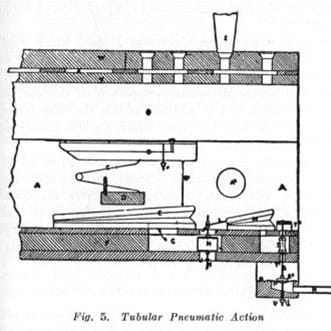
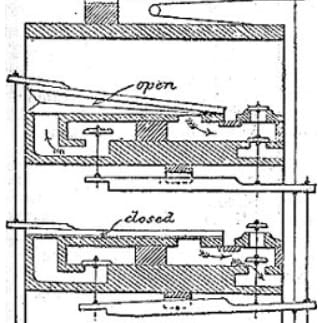
The problem of mechanical noise from Barker levers was overcome by replacing the wooden direct action with a fully pneumatic system. Narrow diameter lead pipes connect the keys and controls from the console directly to the organ.
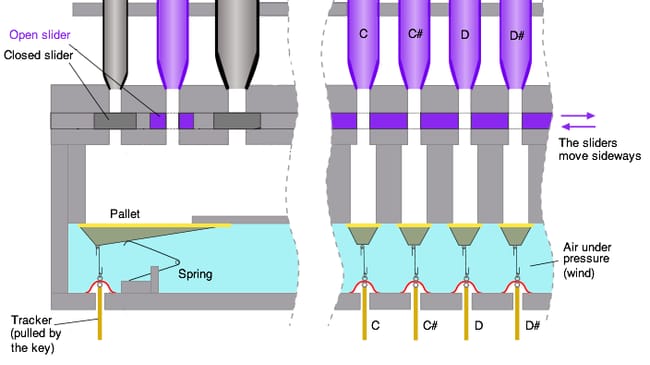
Pressurised air is fundamental to the operation of any pipe organ, readily available to act as a method of signalling the actions of the organist.
To solve the problem of heavy direct key actions, #FatherWillis used Barker levers which made use of pneumatic amplifiers, greatly reducing the keyboard force required to operate each organ pallet.
Barker levers provided a successful solution, facilitating the construction of larger organs, but their operation was accompanied by a mechanical clattering which was obtrusive.
An organ pipe speaks when air is blown through it. Every pipe has a characteristic voice determined by its dimensions and construction. Thin metal pipes emphasise the same harmonics as stringed instruments, wooden pipes produce a sound with few harmonics, like a flute.
The range of pipe voices is further extended by using reeds to emulate brass orchestral instruments.
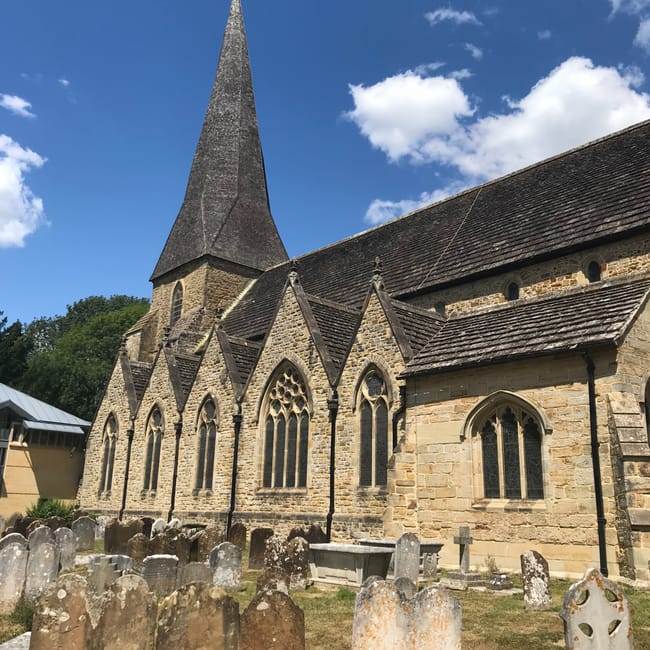
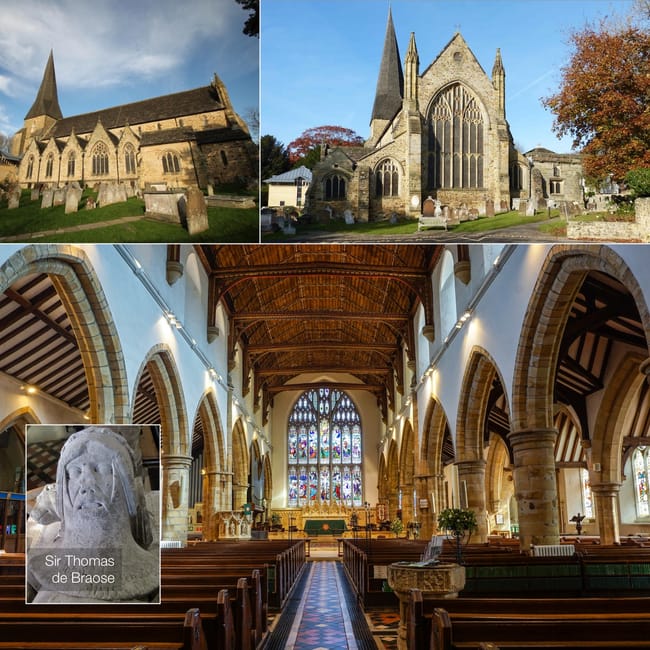
The parish church of #StMary is the oldest building in #Horsham, 12th & 13th CE, mainly #EarlyEnglish. The huge buttressed tower is crowned with a tall 15th CE warped shingled spire. North of the altar is the canopied tomb of #ThomasHoo (d1486) an ancestor of #AnneBoleyn, & to the south the tomb of local landowner #SirThomasdeBraose (d1395). Unusually there is no chancel arch.