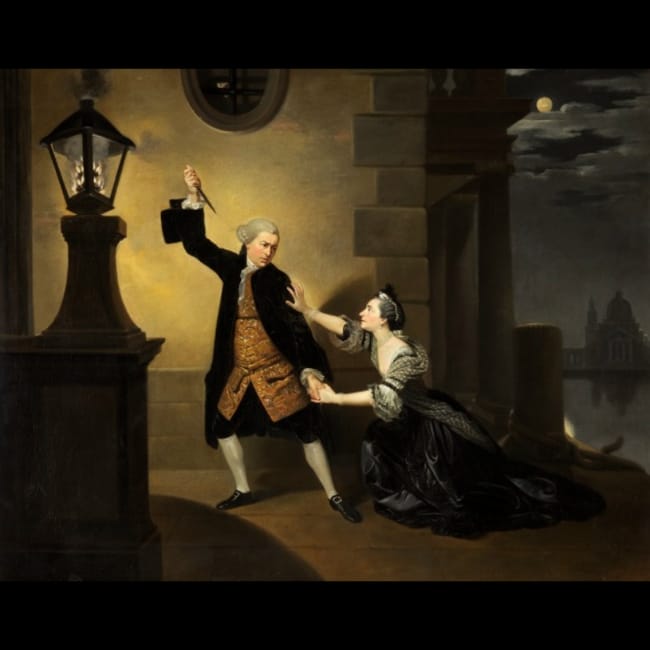
#Storytelling can use many mediums; this one moved from page to stage to canvas. Johan Zoffany portrayed scenes from contemporary plays; this scene is from ‘Venice Preserv’d’ with actors Garrick & Cibber. Jaffeir plots against the Venetian senate but turns in his co-conspirators at his wife Belvidera’s behest. Here Jaffeir threatens to kill her her for losing him his honour.
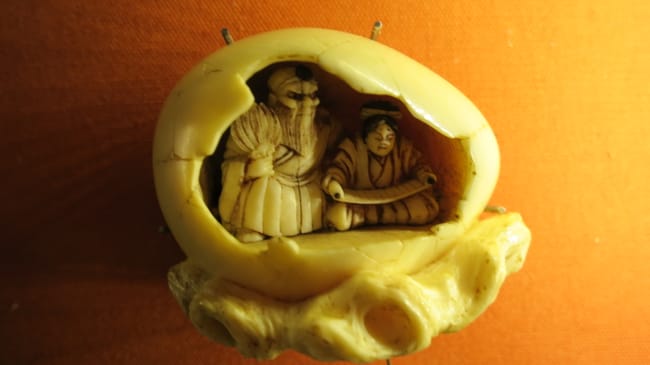
This is a #netsuke; a fastener for an #inro which is a detachable pocket used in Japan from #16CE. This carved netsuke shows the mythical #KingSojobo teaching the #Samurai Minamoto no Yoshitsune in #12CE. Sōjōbō rules over the #tengu spirits from #Shinto belief who take the forms of birds & monkeys. This may be why Sōjōbō & his student appear to be in an eggshell.
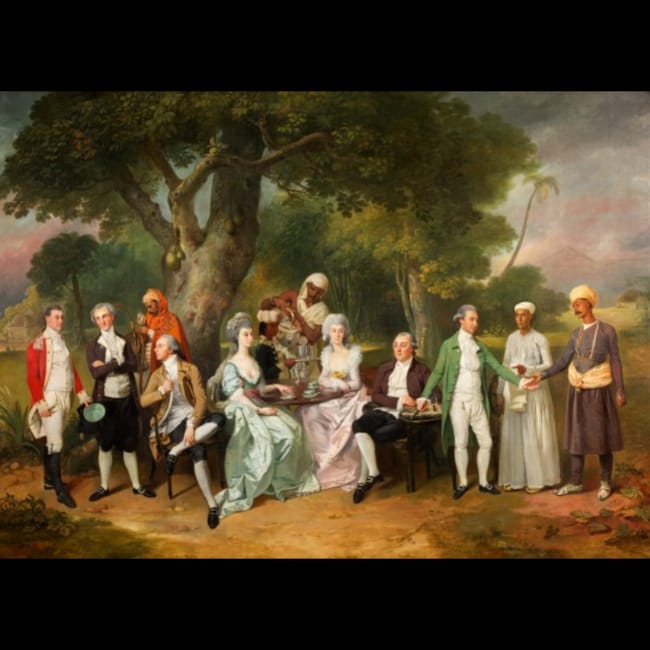
#Colonialism in #India created a western market for all things “exotic”. This painting is of the Auriol & Dashwood families in #Bengal surrounded by Indian servants & partaking of expensive #EastIndiaCompany exports such as silk & tobacco.
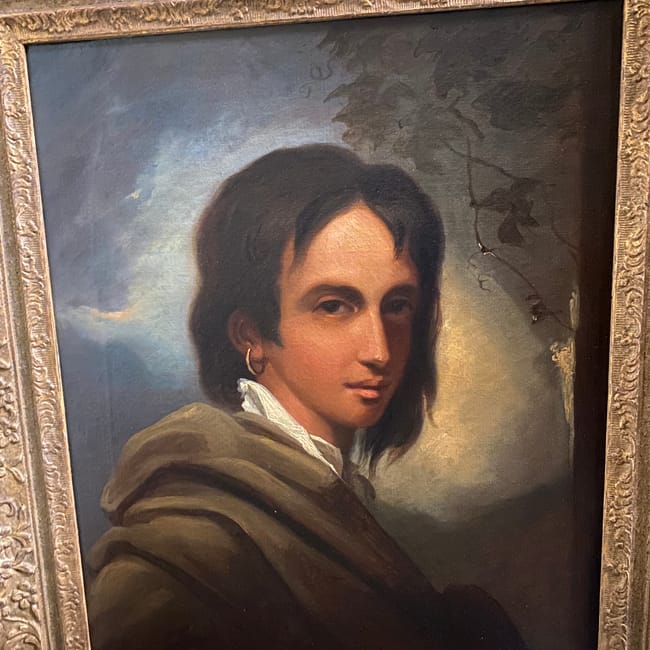
#PrincessCaraboo appeared in #Gloucestershire#1817 speaking a strange language & was adopted by English high society as a princess from the island of ‘Javasu’. She became a sensation until the truth emerged that she was a cobnler’s daughter from #Devon. This painting is called ‘Princess Caraboo’ and is from The Holburne’s archives, but it may only have received its name later.
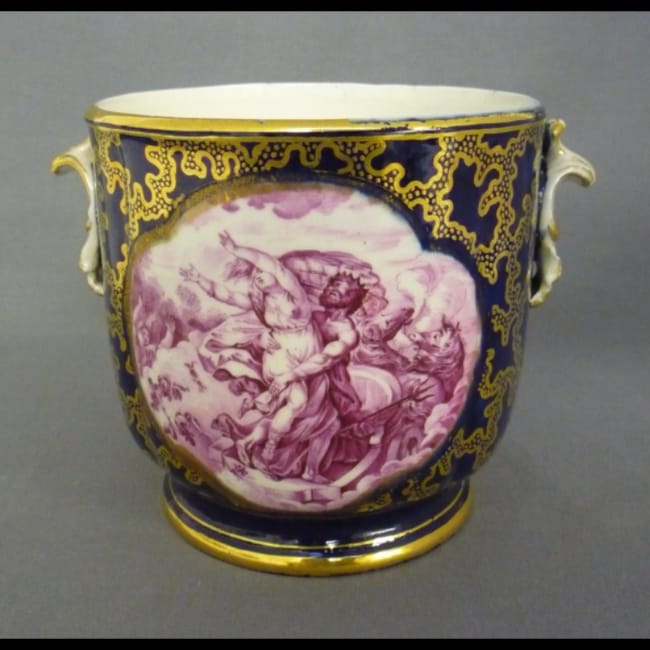
This #18CE wine cooler shows Pluto abducting Proserpine from #RomanMyth. Her mother Ceres goddess of agriculture is so distraught that the world grows cold until they agree that Proserpine will spend half the year above ground and half below, creating the seasons. This story features in Ovid’s Metamorphoses & the image here is very similar to an engraving in a #1770s edition.
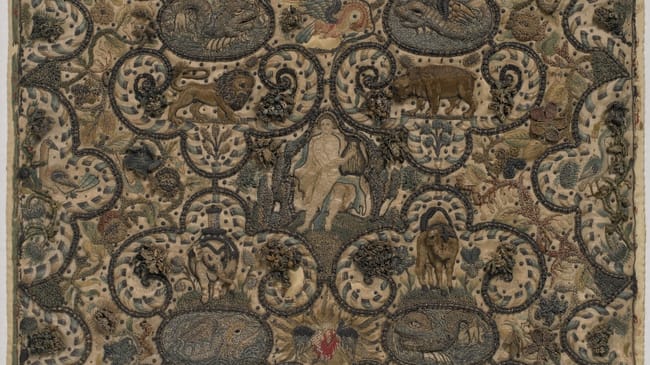
#Orpheus is a figure from #GreekMyth often depicted in #RenaissanceArt as a representation of #Christ. This #tapestry shows us a popular motif of Orpheus from the #1630s surrounded by animals he has charmed with his lyre, richly embroidered with spangles & bullion thread. A fascinating re-interpretation of #AncientMyth to #religious ends.
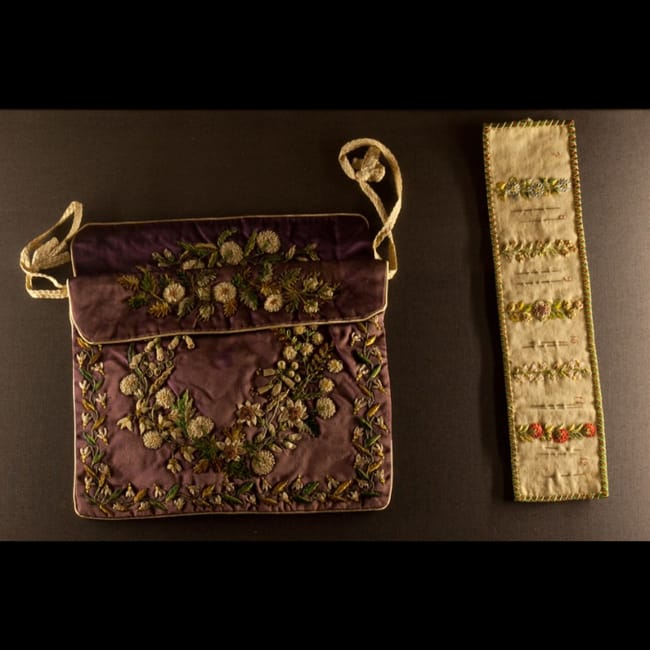
#Myths are re-interpreted to reflect the sensibilities of a period, but the wear & tear of an object can tell us a personal story. This #1830 purple silk bag has intricate hand sewn floral motifs. Preindustrial textiles were all handmade & a #19CE noble lady would embroider small items such as this bag.
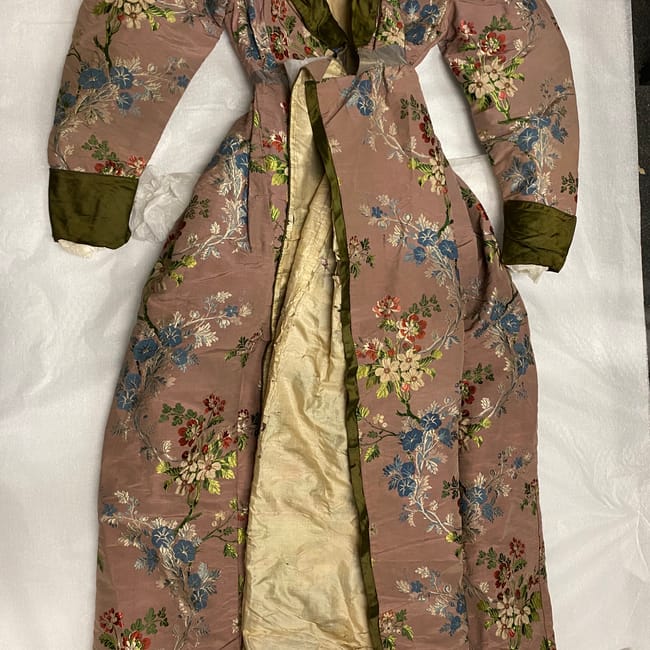
But larger pieces of #brocade were made in workshops in #SpitalfieldsMarket#London with silk imported from #India. Below is a gown in The Holburne’s archives possibly made from Spitalfields silk. Signs of alteration suggest that it was an #18CE Sacque-back dress re-cut to suit #1820s fashion because silk was expensive & re-used often.
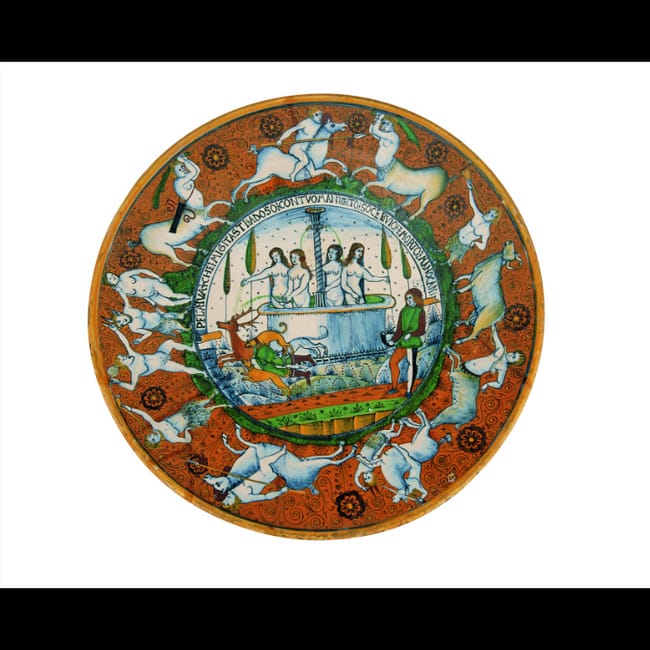
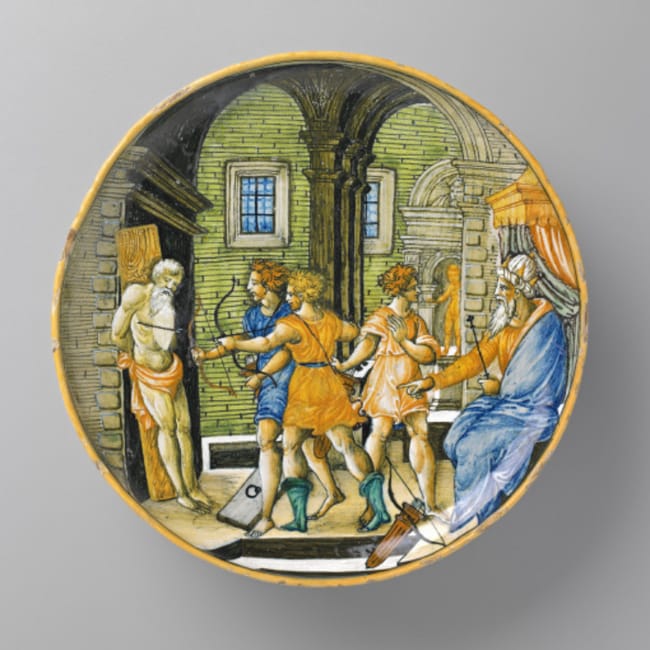
#Biblical & #Classical stories are often subjects of #EuropeanArt and these #16CE#Maiolica plates, tin-glazed earthen ware, are no exception. The largest plate depicts the #GreekRomanMyth of Diana and Actaeon in which the goddess of hunting turns Actaeon into a deer after he spies her naked. His hounds then hunt & kill him as they do not recognise their master.
Here 3 sons fight over an inheritance and are commanded, possibly by #KingSolomon, to to dig up their father’s body & shoot it. 2 brothers do not hesitate, but the pious one turns away & gets the inheritance. This story is from the #BabylonianTalmud (3-7 AD) in which the sons are only challengers to knock on their father’s tomb; his corpse is desecrated in later versions.