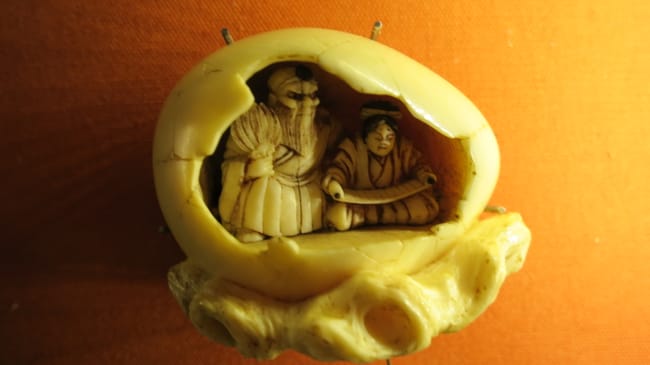
This is a #netsuke; a fastener for an #inro which is a detachable pocket used in Japan from #16CE. This carved netsuke shows the mythical #KingSojobo teaching the #Samurai Minamoto no Yoshitsune in #12CE. Sōjōbō rules over the #tengu spirits from #Shinto belief who take the forms of birds & monkeys. This may be why Sōjōbō & his student appear to be in an eggshell.
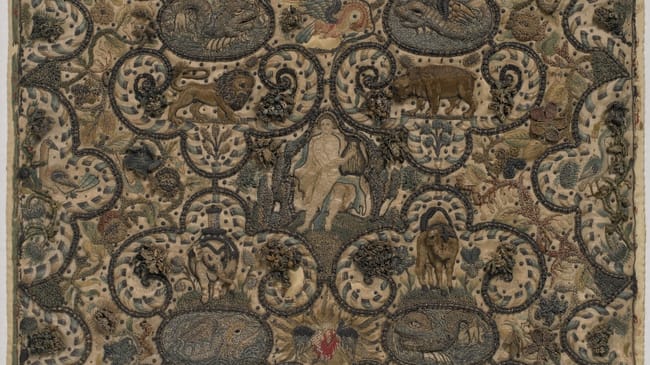
#Orpheus is a figure from #GreekMyth often depicted in #RenaissanceArt as a representation of #Christ. This #tapestry shows us a popular motif of Orpheus from the #1630s surrounded by animals he has charmed with his lyre, richly embroidered with spangles & bullion thread. A fascinating re-interpretation of #AncientMyth to #religious ends.
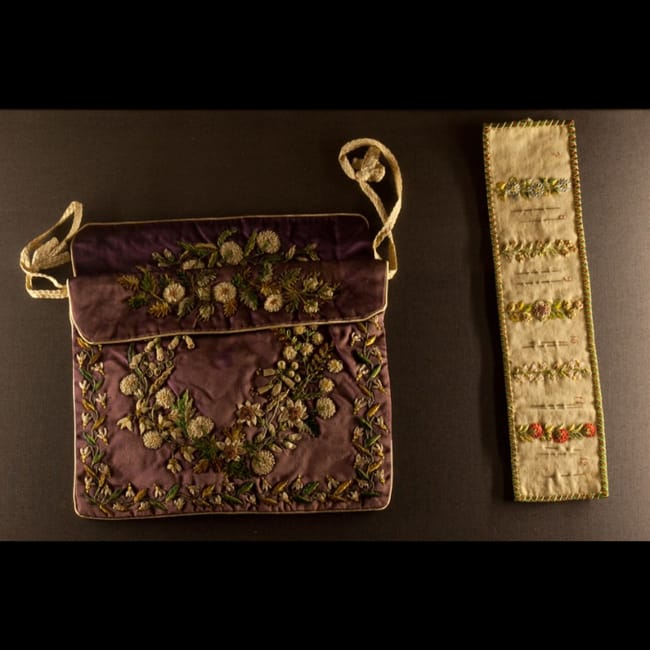
#Myths are re-interpreted to reflect the sensibilities of a period, but the wear & tear of an object can tell us a personal story. This #1830 purple silk bag has intricate hand sewn floral motifs. Preindustrial textiles were all handmade & a #19CE noble lady would embroider small items such as this bag.
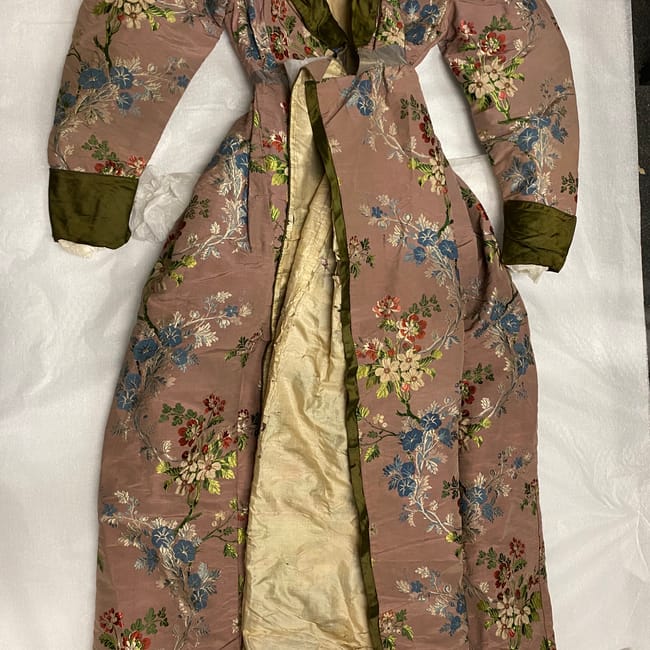
But larger pieces of #brocade were made in workshops in #SpitalfieldsMarket#London with silk imported from #India. Below is a gown in The Holburne’s archives possibly made from Spitalfields silk. Signs of alteration suggest that it was an #18CE Sacque-back dress re-cut to suit #1820s fashion because silk was expensive & re-used often.